



The Beauty of GRC in Outdoor Living
Outdoor spaces today are no longer simply extensions of the home. A garden, terrace, poolside area, or quiet corner surrounded by nature can become a place to dine, gather, relax, and enjoy a slower rhythm of life. For that reason, outdoor furniture needs to offer more than durability. It should have a beautiful form, balanced proportions, and a natural surface that allows it to become part of the landscape.
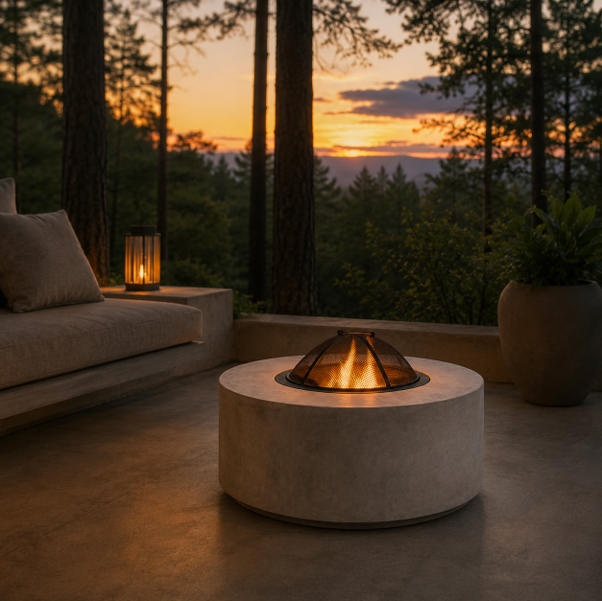
This is where GRC – Glassfibre Reinforced Concrete brings a distinctive design language. GRC has the solidity and authenticity of a mineral-based material, while allowing products to be shaped with greater refinement and visual lightness than traditional concrete. A round table beside a fire, a slender tabletop in a sunlit courtyard, or a minimalist console against a wall can all have a strong presence without making the space feel heavy.
For us, the beauty of GRC lies in this balance: strong without feeling harsh, minimal without feeling cold, contemporary while still remaining close to nature. Unlike perfectly uniform industrial surfaces, GRC carries subtle tonal variations and traces of the hand-finishing process. Slight shifts in colour, soft mottling, or small variations across the surface are not necessarily imperfections. Instead, they create depth and give each piece its own character.
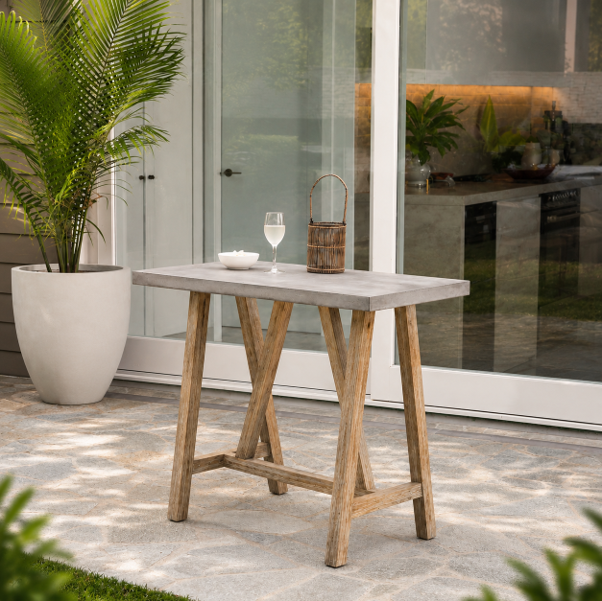
As the light changes throughout the day, the surface of GRC changes with it. In the morning, the material may appear softer and brighter. Under midday sun, its texture becomes more pronounced. Toward evening, tones such as cement, stone, and earthy neutrals become warmer and deeper. This is one of the reasons GRC works particularly well in spaces where materials are meant to live alongside sunlight, greenery, and the surrounding landscape.
A good piece of outdoor furniture should not only look beautiful in a studio. It should belong naturally within the architecture. On a terrace overlooking a forest, a fire pit can become a gathering point at the end of the day. On a tropical patio, a small table can create an intimate dining corner beneath the shade of trees. In a transitional space between indoors and outdoors, a console table can function almost like an architectural line rather than simply a decorative object.
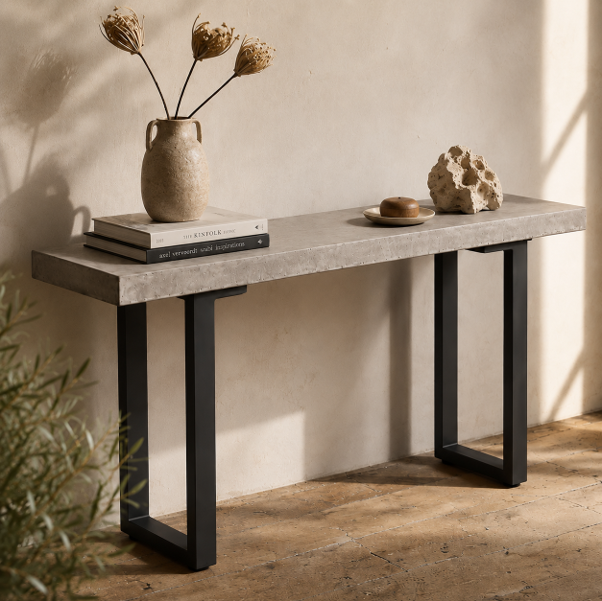
GRC adapts easily to different environments because the material itself does not demand attention. Instead, it provides a neutral foundation that allows architecture, nature, and people to exist together. At Saigon Pottery, we see GRC as more than simply a manufacturing material. Every piece begins with a consideration of form, proportion, function, and surface. Curves should feel soft enough, edges should remain visually refined, and colours should feel natural enough for the product to sit comfortably within many different architectural styles over time.
From coastal resorts to retreats surrounded by mountains, from tropical gardens to contemporary homes, GRC allows us to create objects with a clear presence while still leaving space for the landscape around them. Because in the end, outdoor living is not simply about placing furniture outside. It is about the way material, light, nature, and people come together to shape a living environment.
Dining Tables for Outdoor Living
The dining table has always been one of the most important pieces in a living space. It is not only a place to share a meal, but also a place where people come together, talk, connect, and spend time with one another. When brought outdoors, the table becomes an even greater part of the living experience — under the sunlight, in the garden, beside the pool, or overlooking an open stretch of sea.
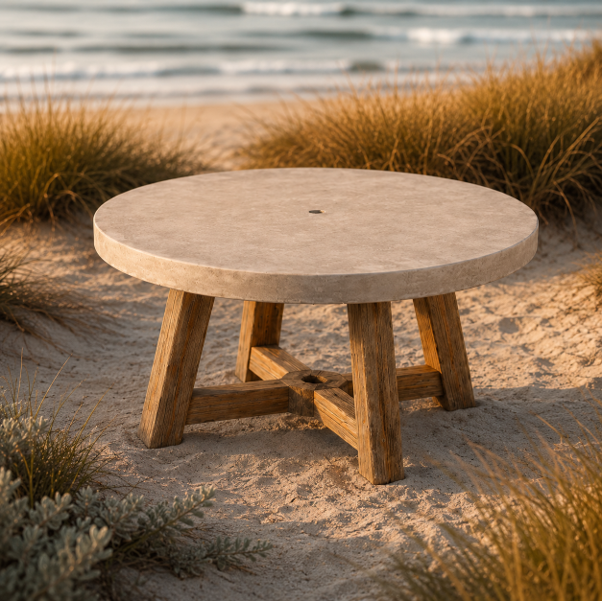
In these environments, an outdoor dining table needs to strike a balance between form, function, and material. Its size should feel comfortable for everyday use, its proportions should work naturally with the surrounding architecture, and its surface should feel organic enough to blend into the landscape rather than stand apart from it. Often, it is the simplicity of the form that allows the table to become a strong visual anchor for the entire space.
GRC offers a wide range of possibilities for outdoor dining table design. The material carries the solid beauty of concrete and stone, while allowing lines and edges to be shaped with greater softness, refinement, and visual lightness. A tabletop can take the form of a substantial slab with gently rounded corners, a circular surface designed for more intimate gatherings, or a long minimal form suited to larger spaces. When paired with GRC, timber, or metal bases, the same tabletop material can take on entirely different expressions.
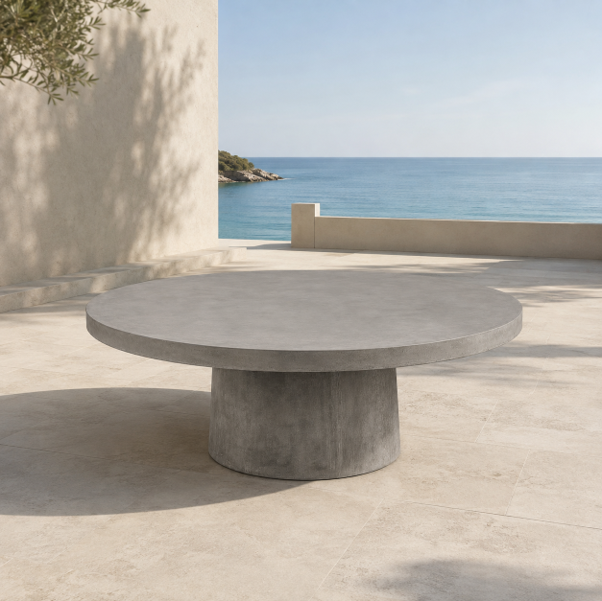
The surface itself plays an important role in the character of each table. Subtle tonal variations, natural colour shifts, and slightly irregular textures give GRC a more authentic, material quality than a perfectly uniform industrial finish. Under the strong light of a coastal terrace, the table may appear bright and clean. In a tropical garden, the same surface can feel warmer when surrounded by greenery, timber, and dappled shade. Near the sea or within a natural landscape, tones such as stone, sand, and weathered cement can almost become part of the environment itself.
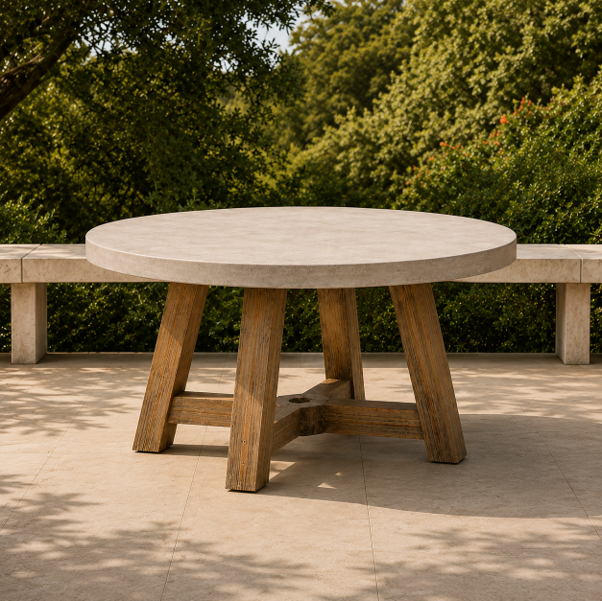
At Saigon Pottery, we see the dining table as a piece designed to live with its surroundings over time. Every design begins with proportion, function, and the way people will actually use the table. The thickness of the tabletop, the stance of the base, the space for seating, and even the tactile feel of the edge all contribute to the final experience.
From a small courtyard made for breakfast to a sea-facing terrace or a resort dining area, the form of the table may change, but its role remains the same: to create a place where people can come together. Because a beautiful dining table does more than complete a space. It gives us a reason to stay a little longer.
Shaping Outdoor Spaces with GRC
A beautiful outdoor space is not defined only by its larger furniture pieces. Often, it is the smaller details — a well-placed coffee table, a planter in just the right position, or a group of planters with harmonious proportions — that bring the entire space together
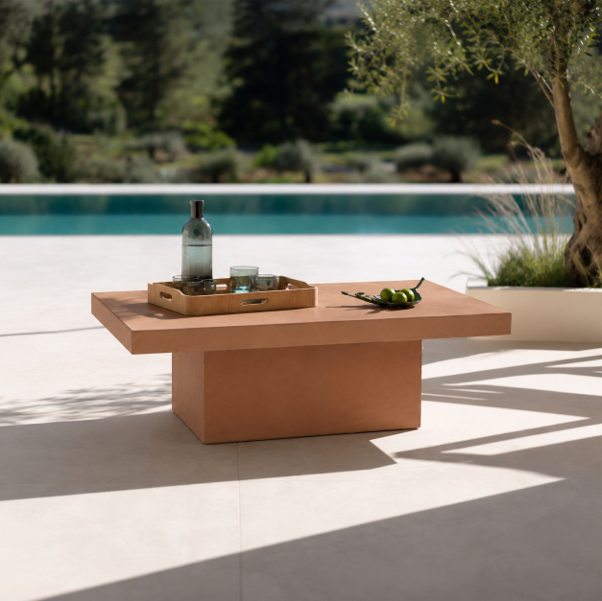
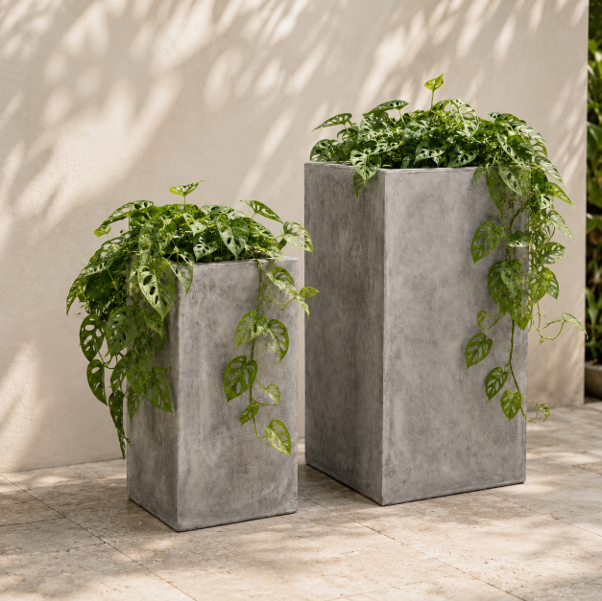
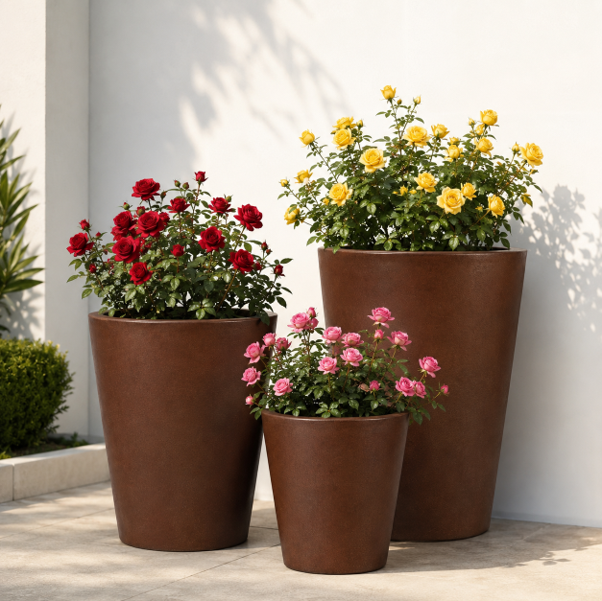
GRC offers a wide range of possibilities for these kinds of details. With its solid presence, depth of surface, and flexibility in form, the material can take on many different roles while still maintaining a consistent design language. A low table by the pool can become a quiet focal point for a lounge area. A grouping of planters in different sizes can create rhythm across a patio. Tall, minimalist planter forms can also be used to guide movement, divide space, or create architectural accents.
What makes GRC especially suitable for outdoor living is its ability to blend into the landscape without losing its own character. Tones such as terracotta, weathered cement, sand, and charcoal pair naturally with greenery, natural stone, timber, metal, and modern architectural surfaces. In direct sunlight, the material’s texture becomes more visible; in the shade, the surface softens and feels even more connected to the surrounding environment.
For planters, form and proportion are just as important as colour. A tall planter can emphasize the shape of a plant, while a lower, wider form works well for softer arrangements or layered flowers. When different sizes are combined within one grouping, the variation in height creates depth and helps the space feel more natural. For this reason, a planter is not simply a container for plants, but part of the overall composition.
Likewise, GRC coffee tables and low tables often act as visual anchors for lounge areas, poolside settings, or terraces. Their simple forms, low proportions, and neutral surfaces allow them to be present in just the right way, while leaving room for light, greenery, and surrounding materials to speak.
At Saigon Pottery, we see these pieces as part of the same outdoor ecosystem. From tables to planters, from softer forms to more defined geometries, each design is created with a balance of function, proportion, and material expression in mind. The goal is not for each object to stand out on its own, but for them to work together in shaping a connected space.
Because a good outdoor space does not need too many details. It simply needs objects with the right proportion, the right material, and the right placement — allowing architecture, greenery, and everyday life to find their balance naturally.